
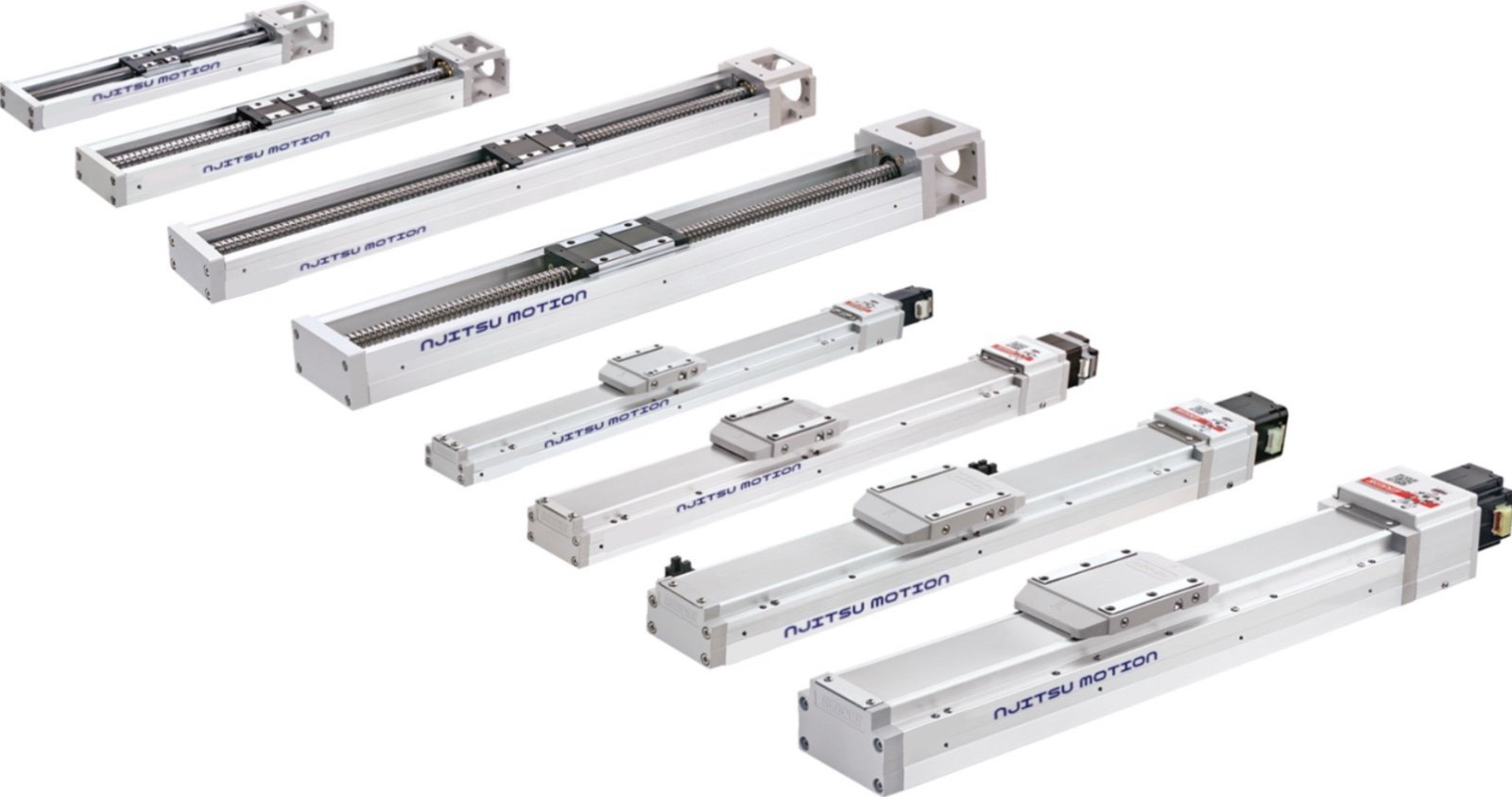
Electric cylinders (also called electric linear actuators) are devices that convert rotary motion (from a motor) into precise linear motion (back-and-forth movement). Unlike pneumatic or hydraulic actuators, electric cylinders offer several advantages:
Precision & Control — They enable accurate positioning, programmable speed, acceleration, and deceleration, unlike the more binary “on/off” control in pneumatic systems.
Energy Efficiency — They only consume power when moving, whereas pneumatic systems must maintain pressure constantly.
Clean & Maintenance-Friendly — No fluids or hydraulic leaks; lower maintenance overhead.
Feedback & Integration — Often come with encoders and interfaces that allow integration with PLCs, motion controllers, and industrial IoT setups.
Compact & Flexible Use — Can be used in constrained spaces or where clean operation is needed (e.g. clean rooms, medical devices, electronics assembly).
Because of these benefits, many modern factories are shifting from older pneumatic or hydraulic systems to electric cylinders—especially in precision, automation, and Industry 4.0 setups.
Njitsu.in & Their Electric Cylinder Portfolio
Njitsu (via their website njitsu.in) prominently features electric cylinders, electric actuators, and multi-axis systems among their key product lines.
njitsu.in
+2
njitsu.in
+2
Here’s a breakdown of what Njitsu offers and how they position themselves:
Series / Product What It Offers Key Features / Applications
AUS Series Compact electric cylinders Designed for compact automation systems that require precise stroke control. High rigidity, various stroke options.
njitsu.in
JDR Series High-precision controllers Closed-loop systems, optimized torque curves, compatibility with sensors and feedback devices.
njitsu.in
Njitsu also positions itself as not just a components supplier but a full automation / factory-integration partner. They list robots, SCARA, cobots, multi-axis systems, ATEX items, and IoT / Industry 4.0 services as part of their portfolio.
njitsu.in
+2
njitsu.in
+2
So, for clients who want not only the cylinder hardware but also system integration, control logic, communication, retrofitting, Njitsu aims to provide end-to-end solutions.
How Njitsu’s Electric Cylinders Fit in Automation Ecosystems
When you integrate electric cylinders like those from Njitsu into a larger automation setup, here’s where they shine:
Motion Control Integration
Because these cylinders support closed-loop feedback (position encoders, sensors), they can be tightly controlled via PLCs or dedicated motion controllers. This makes synchronization, path planning, and dynamic adjustments possible.
Retrofitting / Upgrading Existing Systems
Many older machines or lines use pneumatic cylinders. Replacing them with electric cylinders (e.g. Njitsu’s AUS / JDR series) can reduce maintenance, improve precision, and allow modern control features without overhauling the entire system.
Scalable Multi-Axis Motion
With multi-axis actuators and integrated control, Njitsu’s electric cylinders can serve as building blocks in gantries, pick-and-place modules, small robot arms, or XY/Z tables.
Cleaner & Smarter Factories
For clean manufacturing (electronics, pharma) or where hydraulic fluids are undesirable, electric cylinders eliminate leaks and contamination. When combined with IoT sensors, predictive maintenance becomes feasible.